

The Holloway House
Margaret “Maggie” Bishop stared at the sprawling, crumbling Victorian house before her, its gabled roof and faded grandeur framed by the soft glow of the South Carolina sunset. Holloway House had been built in the 1880s, a masterpiece of its time, but the decades—and its past as a funeral home—had left it scarred and abandoned. Its windows, shattered and empty, stared back at Maggie like hollow eyes.
She gripped the keys in her hand, the weight of the decision she’d made bearing down on her. This wasn’t just a house; it was her last shot at something resembling a fresh start.
At 55, Maggie felt like her life had unraveled. She had moved to South Carolina from her native North Carolina ten years ago, following a husband who had promised a better life near the coast. But the marriage had crumbled, leaving her adrift. The divorce had gutted her emotionally and financially, and her once-bright dreams had dimmed under the weight of depression and anxiety. Starting over felt impossible, but the voice inside her head had whispered that it wasn’t too late.
Holloway House was that whisper made real.
The House and Its Secrets
The purchase had been impulsive, almost reckless. Maggie had stumbled across the listing late one night, scrolling through real estate websites in a haze of insomnia. The price had been shockingly low, the history tantalizing. A Victorian home that had once been a funeral parlor, left to rot for decades? It was as if the house had been waiting for someone like her—someone who could see its potential beneath the decay.
When she stepped inside for the first time, the air felt heavy, carrying a mix of mildew and something harder to place, like old grief. The walls were peeling, the floors creaking, and the grand staircase sagged under its own weight. But Maggie didn’t care. She saw the wide archways, the intricate moldings, the hand-carved banisters. She imagined it restored to its former glory, a testament to her own perseverance.
But as the days turned into weeks, her resolve wavered. The isolation of her new life gnawed at her. The renovations were overwhelming, her budget stretched thin, and the house seemed to resist her efforts. Tools disappeared. Lights flickered even when the electricity was off. And at night, she heard noises—footsteps where there should have been none, faint whispers that sent chills down her spine.
Whispers in the Dark
One night, Maggie woke to the sound of muffled sobbing. Sitting up in bed, her heart pounding, she strained to listen. The sound seemed to come from the floor below. Grabbing a flashlight, she crept downstairs, her anxiety prickling her skin like static. The sound led her to what had once been the embalming room. She hesitated before opening the door. The air was colder here, and her breath fogged in front of her. Inside, the room was empty save for the faint outline of a figure in the corner—a woman, her face hidden in her hands.
“Who are you?” Maggie whispered, her voice trembling.
The figure didn’t respond but faded into the shadows, leaving behind only a sense of profound sadness. Maggie stood there for what felt like hours, her flashlight beam cutting through the darkness. For the first time, she wondered if buying the house had been a mistake.
A Connection to the Past
In the days that followed, Maggie couldn’t shake the encounter. Determined to understand, she dove into the history of Holloway House. Records revealed its dark past: during its years as a funeral home, there had been rumors of malpractice, bodies mishandled, and grieving families swindled. The original owner, a man named Thomas Holloway, had disappeared under mysterious circumstances, leaving behind a legacy of whispered horrors.
But there were other stories, too. Stories of kindness, of lives celebrated, of the house as a place of community and healing. Maggie clung to those stories, determined to honor that part of its history. She began documenting her experiences, setting up cameras and voice recorders in the rooms where she felt the strongest energy. The house spoke to her—through flickering lights, cold drafts, and whispers caught on tape. The spirits weren’t hostile; they were lost, like her.
Finding Purpose
The work of restoring the house became a form of therapy. As Maggie patched walls and sanded floors, she felt a connection growing—not just to the house but to herself. She realized that every creak and groan, every ghostly encounter, mirrored her own struggles. The house was broken, but it could be healed. And so could she.
One night, while reviewing her recordings, Maggie heard a voice that made her pause. It was faint but unmistakable: “Thank you.”
Her heart swelled. She began holding small séances, not to banish the spirits but to understand them. Each session revealed a new piece of the house’s story—a grieving mother, a forgotten child, a man seeking redemption. Helping them find peace became her purpose.
A Dream Realized
Months turned into years, and Holloway House transformed. The peeling paint was replaced with a fresh coat, the broken windows with gleaming glass. Maggie turned the house into a bed-and-breakfast, a sanctuary for travelers and a haven for those curious about the paranormal. The spirits lingered, but they no longer felt oppressive. They were part of the house, part of her story.
Maggie still had hard days. Depression and anxiety didn’t vanish overnight. But as she stood on the porch of Holloway House, watching the sun rise over its restored beauty, she felt something she hadn’t felt in years: hope.
She hadn’t waited too late to chase her dream. She had simply arrived at the right time, in the right place, to find it.
A New Chapter for Holloway House
Holloway House quickly gained a reputation as more than just a bed-and-breakfast—it became a destination for the curious and the grieving. Paranormal enthusiasts visited to experience the lingering spirits, while others came for the beauty of the restored Victorian home. Maggie found herself at the center of a community she hadn’t realized she was building.
Guests shared their own stories of loss and struggle, drawn to the house as if it offered something intangible: connection. Maggie listened, always ready with a kind word or a knowing nod. The house had become a place of healing, not just for her but for everyone who walked through its doors.
The Spirits Speak
One evening, after all the guests had retired, Maggie sat in the parlor, sipping tea and reflecting on how far she had come. The house, once heavy with despair, felt lighter now. But she knew not all the spirits had moved on. Some still lingered, tethered to their pain or their secrets.
She decided to conduct a final séance—not to banish them but to offer them a chance to tell their stories. Setting the table with candles and her trusted voice recorder, Maggie called out, “If anyone is here, you’re welcome to speak. I’m listening.”
The air grew colder, and the flames flickered. Then
came a voice, faint but distinct: “Thomas.”
Maggie leaned forward. “Thomas Holloway? Is that you?”
The response was delayed, as if coming from far away. “I stayed… to protect them.”
“Protect who?” Maggie asked, her heart racing.
“Those they forgot.”
Uncovering the Final Secret
Maggie couldn’t sleep that night, her mind racing
with questions. The next morning, she began searching the property again. Though she had already explored much of the grounds during the renovations, she had a feeling there was more to uncover. Thomas’s words echoed in her mind: “Those they forgot.”
In the farthest corner of the backyard, near a cluster of overgrown azaleas, she found it: a small, weathered marker hidden beneath years of moss and dirt. Clearing it away, Maggie revealed a simple inscription: “For the Forgotten.”
Her chest tightened as she realized what she had found. This was no ordinary marker; it was a mass grave. Thomas had stayed behind not as a tormentor but as a guardian, protecting the memory of those whose lives had been discarded by the funeral home’s darker days.
Maggie contacted local authorities, and together they unearthed the site. The remains of six individuals were found, each one a testament to the house’s shadowy past. She felt a wave of sadness but also relief. They had been found. They could finally be honored.
A Farewell and a Promise
That evening, Maggie held a small ceremony in the garden. Guests, neighbors, and even a few members of the historical society gathered to pay their respects. The names of the deceased were unknown, but Maggie spoke for them, her voice steady and full of conviction.
“We honor you today,” she said, “because every life matters. You are not forgotten.”
As the ceremony ended and the crowd dispersed, Maggie lingered by the marker. The air felt warm, almost comforting. She closed her eyes and whispered, “They’re safe now, Thomas. You can rest too.”
For the first time, the house felt completely still. No flickering lights, no whispers, just a profound sense of peace.
A Legacy of Light
Holloway House thrived in the years that followed. It became more than just a home for Maggie; it was a symbol of her resilience and a sanctuary for others.
She continued hosting guests, leading paranormal investigations, and sharing the stories of the house and its spirits.
Though she was now surrounded by people, Maggie still valued her quiet moments. On warm evenings, she sat on the wraparound porch, watching the fireflies dance and listening to the distant hum of cicadas. In those moments, she felt a deep connection to the house and its history—a history she had helped heal.
At 55, she had felt lost, wondering if she had waited too long to pursue her dream. Now, at 60, she knew she was exactly where she was meant to be. Holloway House had given her purpose, and she had given it life.
And in the soft rustle of the garden’s azaleas, she sometimes thought she heard a voice—a whisper of gratitude, carried on the wind. “Thank you.”
The Unexpected Visitor
Life at Holloway House had settled into a rhythm. Maggie balanced her days between running the bed-and-breakfast, hosting small paranormal tours, and maintaining the house’s upkeep. The spirits had grown quiet since the garden ceremony, and for the first time in years, Maggie felt a sense of stability.
But one morning, as she was setting up breakfast for her guests, a knock on the door shattered her routine. It wasn’t the casual knock of a curious tourist but a firm, purposeful one. Maggie wiped her hands on a dish towel and opened the door.
A man in his late 30s stood on the porch, his expression a mixture of nervousness and determination. His clothes were rumpled, and he clutched a worn leather satchel.
“Mrs. Bishop?” he asked.
Maggie nodded. “Yes. Can I help you?”
“My name is Daniel Holloway,” he said. “I think this house belonged to my family.”
A Family Connection
Daniel explained that he had recently started tracing his family tree and discovered that his great-great-grandfather was Thomas Holloway. Though he had known of the name growing up, his family had rarely spoken about him, and the details surrounding the house were vague. Intrigued, Daniel had traveled to South Carolina to see it for himself.
Maggie invited him in, offering him coffee and a seat at the long dining table. She shared what she knew about the house’s history and her experiences since moving in. Daniel listened intently, his face pale as she described Thomas’s lingering spirit and the mass grave in the garden.
“Do you think he’s still here?” Daniel asked, his voice quiet.
Maggie hesitated. “No,” she said gently. “I think he’s finally at peace. But his presence left a mark on this place. He stayed to protect those who couldn’t protect themselves.”
Daniel nodded, his eyes misting. “That sounds like the man my grandmother used to describe—a protector, but someone burdened by guilt.”
Unlocking a New Mystery
Before leaving, Daniel handed Maggie a bundle of old documents and photographs from his family archives. “These were in my grandmother’s attic,” he said. “I thought you might find them interesting.”
As Maggie pored over the papers that evening, one item stood out: a handwritten map of the house and its grounds, dated 1901. It showed features Maggie hadn’t seen before, including what appeared to be a hidden cellar beneath the carriage house.
The next day, armed with the map, Maggie set out to explore. The carriage house had been little more than a storage shed since she moved in, filled with old tools and rusting equipment. Following the map, she cleared away debris until she found a trapdoor hidden beneath a tattered rug. The door creaked open, revealing a set of narrow stone steps descending into darkness.
The Cellar’s Secrets
The cellar was cold and damp, its walls lined with shelves of jars and boxes. Maggie’s flashlight revealed faded labels: herbs, ointments, tinctures. It appeared to have been used for apothecary work, likely connected to the funeral home.
But in the far corner, something else caught her eye—a wooden chest bound with iron. Her hands shook as she pried it open, revealing its contents: letters, ledgers, and a small, leather-bound diary. The name embossed on the cover sent chills through her: Thomas Holloway.
The diary chronicled Thomas’s life in the funeral business, his dedication to providing dignity for the dead, and his growing unease as his partner, Silas Croft, began exploiting grieving families. Thomas described his efforts to stop Silas and his eventual discovery of the man’s horrifying practices.
The final entries were frantic, detailing threats from Silas and a plan to expose him. But they stopped abruptly. Maggie realized that Thomas had likely vanished before he could carry out his plan.
Setting the Record Straight
Maggie shared the discovery with Daniel, who was deeply moved. Together, they worked to publish the diary’s contents, finally bringing Thomas’s story to light. The truth about his bravery and the circumstances surrounding his disappearance were revealed to the community, casting him not as a villain but as a man who had tried to do the right thing.
The revelations brought renewed interest to Holloway House, drawing historians, journalists, and paranormal enthusiasts alike. Maggie used the funds from the increased tourism to continue restoring the property, ensuring that its legacy would endure.
Finding Belonging
For the first time in years, Maggie no longer felt lost. Holloway House had given her a purpose, a connection to others, and a sense of accomplishment she never thought she’d achieve. She often spent evenings on the porch with Daniel, who had become a regular visitor, sharing stories and dreams of what the house could still become.
Though the spirits had grown quiet, Maggie sometimes felt their presence in the stillness of the night. She imagined Thomas watching over her, satisfied that his story had finally been told.
At 55, Maggie had wondered if she was too late to start over. Now, she knew the truth: life didn’t have a timetable, and it was never too late to rebuild, to find hope, and to leave a legacy. Holloway House wasn’t just a home—it was a second chance, for her and for everyone it touched.
Restoring More Than a House
As Holloway House blossomed into its new role as a historic landmark and paranormal research hub, Maggie found herself surrounded by a network of people who cared deeply about its story. Volunteers helped her restore more of the property—polishing the grand staircase, repairing the delicate stained- glass windows, and even rebuilding the crumbling carriage house into a charming event space.
Maggie found joy in hosting gatherings, from historical lectures to small paranormal conventions. The house, once a place of isolation and sorrow, had become a lively center for education and connection. She often marveled at how different her life had become. The sense of belonging she once thought was out of reach had finally found her.
A Whisper in the Garden
One summer evening, as Maggie tended to the azaleas in the garden, she felt a familiar chill. It wasn’t the oppressive cold of an angry spirit but the light, soothing presence she had come to associate with Thomas Holloway. She straightened, brushing dirt from her hands, and turned toward the marker where the forgotten graves had been uncovered.
The air seemed to shimmer, and a faint voice reached her ears. “You’ve done well.”
Maggie smiled, tears prickling her eyes. “Thank you, Thomas,” she said softly. “I couldn’t have done it without you.”
There was no reply, but the warmth that settled over her felt like an embrace. Maggie stayed there for a while, the scent of blooming flowers and the hum of cicadas surrounding her. She had done what she set out to do—honored the past, given the spirits peace, and created a new life for herself.
A New Venture
With Holloway House thriving, Maggie felt ready for her next challenge. Daniel, now a close friend and collaborator, suggested they expand their efforts beyond the house. “There are other places like this,” he said one evening as they reviewed inquiries from curious visitors. “Other places with stories that need to be told.”
Maggie loved the idea. Together, they formed the Holloway Society for Historic Restoration and Paranormal Research, dedicated to preserving forgotten landmarks and uncovering the hidden truths of their pasts. They began traveling to nearby towns, investigating old houses, forgotten cemeteries, and even an abandoned asylum.
Every project brought new challenges, but Maggie approached them with the confidence she had gained at Holloway House. She found that her experiences had given her not only expertise but also a deep compassion for the stories tied to each place.
Legacy and Peace
By the time Maggie turned 60, she had transformed more than just one house. Her work with the Holloway Society had brought new life to forgotten places and new purpose to her own life. She was no longer just a woman rebuilding after a divorce and personal hardships—she was a leader, a healer, and a storyteller.
One crisp autumn morning, Maggie stood on the porch of Holloway House, sipping coffee and watching the sunrise. The property was alive with activity—guests milling about, researchers setting up equipment, and volunteers tending to the garden. She felt an overwhelming sense of gratitude.
The house, once her symbol of despair, had become a place of hope and renewal, not only for her but for everyone who crossed its threshold. It had taught her that it was never too late to start over, to dream again, and to create something meaningful.
As the sun climbed higher, warming the aged wood of the house and the vibrant colors of the garden, Maggie smiled. She no longer questioned whether she had made the right decision all those years ago. She had. Holloway House had given her life back— and in return, she had given it a future.
*********************************
Genre: gothic horror, paranormal thrillers, and ghost stories
Age range: 16 and over
Word count: 3,194 (One short-story out of Haunting Susurrations “Tales from the Shadows")
Author name: Jennifer VanBoskerck
Why The Holloway House is a Good Fit
The Holloway House is a blend of psychological suspense, gothic horror, and emotional healing—perfect for readers who love atmospheric, character-driven ghost stories with a strong emotional core. The novel aligns well with Trident Media Group’s focus on bestsellers in commercial fiction, particularly in the genres of supernatural suspense, gothic fiction, and paranormal mysteries. Fans of Shirley Jackson’s The Haunting of Hill House, Simone St. James’ The Book of Cold Cases, or Jennifer McMahon’s The Winter People will find much to love in The Holloway House.
The Hook
A woman seeking a fresh start buys a long-abandoned Victorian funeral home—only to uncover its tragic and sinister past. As she restores the house, she realizes she isn’t alone. The spirits within whisper their stories, some seeking help, others warning her to leave. When she unearths a secret mass grave, she must unravel a century-old mystery before she becomes part of the house’s dark history herself.
Synopsis
Maggie Bishop, a 55-year-old divorcee struggling with depression and uncertainty, impulsively buys Holloway House, an abandoned Victorian funeral home with a dark past. Hoping to restore it into a bed-and-breakfast, she quickly realizes that the house has secrets—whispers in the night, vanishing tools, and shadows that move without explanation.
Determined to uncover the truth, Maggie dives into the house’s history, discovering a tale of malpractice, lost souls, and a vanished owner, Thomas Holloway. As she begins to communicate with the lingering spirits, she realizes they are not here to haunt—they are trapped, waiting to be heard. When she uncovers a hidden graveyard on the property, she pieces together a cover-up from over a century ago.
As Maggie races to bring peace to the spirits, she finds healing in herself. But not all ghosts wish to move on—some want her to stay, forever.
Target Audience
This novel will appeal to:
Fans of gothic horror, paranormal thrillers, and ghost stories
Readers who enjoy atmospheric, slow-burning mysteries
Women’s fiction readers who connect with themes of reinvention and second chances
Paranormal enthusiasts intrigued by real-life ghost stories and supernatural investigations
About Me (Bio)
I am a seasoned paranormal investigator and the owner of The Holliday House, a renowned haunted location. As a new writer, I have a deep passion for crafting eerie, atmospheric stories that intertwine the paranormal with psychological depth. My writing delves into themes of grief, redemption, and the unseen forces that shape our lives. With a strong background in research and firsthand experience in the supernatural, I strive to create compelling, character-driven narratives that evoke emotion and keep readers on edge.
Platform
I am working towards publishing my work and engaging with readers through various platforms. While I have attempted to publish on Amazon but encountered challenges, I remain committed to sharing my stories. My future plans include:
Building an online presence with a website featuring short stories, behind-the-scenes insights, and reader discussions.
Connecting with the bookish and paranormal communities through social media.
Exploring online forums focused on gothic literature, haunted history, and supernatural research.
Developing book club partnerships and hosting paranormal-themed events after publication.
I am determined to bring my stories to readers and create an interactive, immersive experience around my work.
Education & Experience
· Deep knowledge of folklore, haunted locations, and historical accounts of paranormal phenomena.
· Firsthand experience with the paranormal, haunted locations, and personal emotional turmoil.
· Strong grasp of pacing, suspense, and character development, ensuring The Holliday House delivers both a chilling ghost story and a profound emotional journey.
Personality & Writing Style
I bring a deep emotional resonance to my writing, blending atmospheric, immersive storytelling with rich character development. My prose is vivid and cinematic, capturing eerie, haunting moments with a poetic touch while maintaining a compelling, fast-paced narrative. My goal is to make the supernatural feel unsettlingly real, immersing readers in a world where ghosts linger and the past refuses to stay buried.

The Star Keeper’s Journey
Chapter 1: The Boy and the Sky
Once upon a time, there was a boy who lived in a tiny village beneath a sky so vast, it seemed to stretch beyond the edges of the world. He had never seen anything but that sky, and yet, he believed it held endless secrets. His name was Prayden, and though he had the ordinary life of a child—climbing trees, playing with friends, helping his parents—he always wondered about the stars above.
Prayden had a special gift: he could hear the stars. It wasn’t as though the stars spoke with words, but in the quiet of the night, Prayden could sense their stories. Sometimes they whispered of distant lands and forgotten histories. Other times, they hummed softly, as though they were singing a lullaby no one else could hear.
One evening, while the sun sank into the horizon, Prayden heard a soft calling from one of the stars. It was faint at first, like a thread of music in the distance, but it grew clearer with each passing second. He had to find out what it meant.
And so, Prayden did the only thing that made sense to him—he decided to climb to the sky.
Chapter 2: The Journey Begins
The next morning, Prayden woke with a sense of purpose. He packed a small bag with bread, a flask of water, and his favorite red scarf. He kissed his parents goodbye and promised he’d return soon, though deep down, he wasn’t sure when that might be.
He started his climb. He climbed higher than any boy had ever climbed before, through the hills, past the forests, and into the mountain range where the clouds brushed against his fingertips. With each step, the air grew thinner, and the ground beneath him became more rugged. But the pull of the star was undeniable.
Soon, Prayden came across a peculiar path. It was made of silver stones that shimmered underfoot. He followed it, and the farther he walked, the more he noticed that the world around him seemed to shift. Trees turned to glass, flowers bloomed in colors he had never seen, and the sky itself seemed to bend, as if inviting him to go further.
After hours of walking, Prayden arrived at a plateau, where a great stone archway stood. Beneath it sat an old man, his white beard trailing to the ground, his eyes as deep as the night sky. He was gazing at the stars, his hands folded in his lap.
“You’ve come to seek the stars,” the old man said without turning his head.
Prayden nodded. “I hear them calling.”
The old man smiled. “Then you must learn their language.”
Chapter 3: The Keeper of Stars
The old man led Prayden to a small cave beneath the archway, where the walls were covered in strange symbols and glowing constellations. The cave was filled with an otherworldly light, and it smelled of earth and stardust. Prayden felt like he had entered another realm altogether.
“You see, young one,” the old man said, sitting down cross-legged beside him, “the stars are not mere lights in the sky. They are beings, just like you and me. They are ancient, and they hold the stories of the universe.”
Prayden listened intently.
“Each star carries a memory, a lesson. Some are sad, others joyful, but all are important. You hear their whispers because you are ready to understand their language. But you must learn to listen with more than just your ears.”
For days, Prayden sat with the old man, learning how to hear the stars. He was taught to feel their vibrations in his heart, to see their light through his eyes, and to understand their silence as much as their sound.
And then, one night, the old man gave him a small, golden key. “This is the key to the star you have been searching for. It will show you the path, but you must use it with care.”
Prayden took the key, his hands trembling. “How will I know which star to unlock?”
The old man chuckled softly. “The stars you seek will find you when you are ready.”
Chapter 4: The Star
With the key in hand, Prayden climbed higher than before, following the faint glow of a distant light. The stars seemed to guide him, their whispers growing louder with each step. He came to a towering stone pillar where the night sky opened up like a great doorway.
At the top of the pillar, Prayden found a single star, more beautiful than any he had ever seen. It shone with a light that was both soft and fierce, like a flame that would never go out. Prayden approached it, holding the key out before him. As he did, the star seemed to shimmer, as if recognizing him.
He placed the key into a small lock at the center of the star, and with a soft click, the star began to unravel, unfolding like a delicate flower. The light around him grew brighter, and the whispers of the stars became a symphony of voices.
The star spoke to him, not with words, but with a feeling that filled his chest.
“Prayden, you have unlocked the heart of the sky. What do you seek?”
Prayden thought for a moment. “I want to understand the stars. I want to know their stories.”
The star smiled, and its light wrapped around him like a warm embrace.
“The stars do not need to be understood. They simply need to be seen. The stories are in the looking, not in the knowing.”
Chapter 5: The Return
When Prayden awoke, he was back in his village, sitting beneath the vast sky. The stars were still there, twinkling as always, but now they seemed more alive than ever. They were not just lights in the sky. They were companions, silently watching over him.
From that night on, Prayden spent his evenings gazing at the stars, knowing that each one held a story—a story he could never fully understand, but one he would always cherish. And sometimes, when the wind was just right, he could hear them whispering to him once again, not in words, but in the music of the universe.
And that was enough.
The End
The Star Keeper’s Journey
children’s book
Fantasy
A story about a little boy who hears the sky speaking to him, so he decides to take a journey to try to reach the stars
Anyone with an imagination Betwee and 12
I’ve had an extremely hard life battling abuse, addiction, incarceration but I have never lost my faith.
I am a published author of a poetry book called poets voice by David Samuel King
I have a associates degree in theology currently going for a bachelors.
I love to write I love watching movies and playing with my son Prayden.
I was born in Little Rock, Arkansas, but I was raised in Armona, California
I don’t really have a style of writing. I love to write about all kinds of different things.
I am 39 years old I will be 40 in April.

Sad
I couldn't stop; danger was near. Saddened fierce eyes watched as I came near, knowing the thud would hurt more later. An ugly enraged cry, some contraband liquor, and a trip to hell in the evening. A ghost forever follows with her eyes as sad as mine.
Ernie Vegas. its probably not a good fit, Disabled American Veteran haunted by my mind, I write what comes, 9 times out of 10 they are bad. I'm just putting the words out there if it fits cool thanks for reading. I write under a Pen name.
This poem comes from an ambush were a life is taken to save others, a life that shouldn't have been that close to war.

My Garden
Before me stands a big oak door. I stare in silence, tracing each groove, too afraid to knock. I know already what lies on the other side. A lush garden, with vibrant flowers and a warm sun. I've been there before. I remember the cozy embrace of the garden. The delicate fragrance, the beautiful light, and the sounds of laughter from spirits running free. But one day I awoke and found that I was on the wrong side of the door.
The dark vines tug at my feet. The earth is dry, the air is arid. I can feel the thorns dig into my arms. A flame ignites the brush, and I freeze, terrified, as it blazes. I cannot escape this. I cannot go through the door, I have to keep my garden safe. My tears leave my face sticky, but I accept my fate. I know the flames will die down if I can endure them long enough. As the fire whips across my legs, I dream of leaving this hellish world.
One day, the garden door opened. At first, I was overjoyed. The wind danced, and petals flurried. But I soon became afraid of what the brush could do to it. In a panic, I gathered the flowers. I brought them to a new house, far away. I set them in water, and let them grow roots. I know I have to return to my home, but I find comfort knowing that the garden can grow freely.
With the door now open, I return to the room where the garden once was. The beloved flowers are gone, but I know that I am safe from the fire on this side of the door. Here I will stay, with no fragrance and no sun, no brush and no flames. Every so often, I brave the danger again for the chance to visit the garden. The flowers keep growing, far away from me.
One day, I decide to break free. The vines against my door will not hold me back. The fire will not control me. I find myself running back to the garden. I think of the flowers, the breeze, the sun, the spirits. I think of the time I had cherished in the garden. But when I arrive I realize that the house is locked. And once again, I am on the wrong side of the door.
I wander for a while, among the snow and ice. Among the frigid, roaring wind, I even find myself missing the fire. I feel cold and alone. Months go by, and I am nearly frozen. As I accept my stagnant condition, I feel flickers of a familiar warmth. Cautious but hopeful, I open my eyes and take in the gentle sunlight. And in front of me, I see a hand. Another person, someone just like me. I reach forward and take the hand they offered. I let them lead me to a beautiful new house. I open the door, and find that each room is empty. The hand once again reaches out, this time offering me a single flower. Tears flood my eyes as I gently brush the petals. Together, we will build a garden. One that I can truly call mine.
-------------------------
My Garden- A Fiction Short Story by Lana Gladbach, Age 21
541 Words
Ages 15+
I mostly write in stream-of-conciousness, but I also enjoy writing short stories and children's stories.
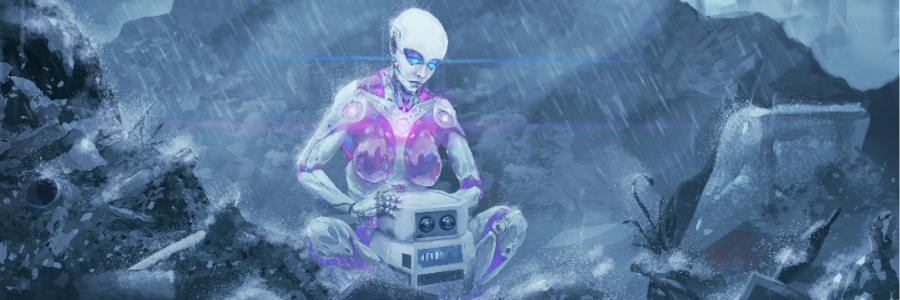

Love in the Time of Machines
Title: Little Robot
Genre: Scifi, horror, action, romance
Age range: 18+
Word count: 93,985
Author name: Alex Beyman
Why your project is a good fit: Could anything be more topical? It speaks to the public's anxieties about AI on multiple fronts; How it will disrupt the economy. How it will disrupt the battlefield. How it will disrupt the bedroom. A multifaceted, exciting and at times heartfelt exploration of how our world is about to be radically transformed by thinking machines.
The hook: Terminator-ish? Closer to the Walking Dead with home robots hijacked by malware (more Teslabot than T-800) instead of zombies. Except, the main character is a misanthropic engineer who wants the robots to win. His companion and love interest, a gynoid he grew out of a simple phone assistant, resists his attempts at grooming her to join in his hatred. Warmer hearted than her creator, she sees the good in us while he sees only the bad.
Synopsis: Taken from a Goodreads review: "Little Robot is a story about a man who relates more to machines than other people. He keeps a house full of old robots on legacy software, and empathizes with them more than the people he must work with daily. He sees robots as a species that cannot yet take care of themselves. When a virus turns all the robots into killers, triggering the near-apocalypse, the protagonist and his favorite robot, Helper, must figure out how to survive in the new world. A romance develops between the human protagonist and Helper and of course, that comes with complications.
There are some issues with the story. It's rough in some parts. It can drag on in other parts. There are a few monologues that strike me as very much of a self-insert. But overall I enjoyed reading the story, and the ending really blew me away. For a while I wasn't sure if Little Robot was going to really convey the complexity of the human-robot relationship it created, but then it went several steps beyond what I anticipated. I won't say what happened, for fear of spoilers."
Target audience: This one's got something for everyone. Tender moments will have you cutting onions: "Of course there are still scenes and situations where I was moved. I actually had teary eyes on an occasion or two (fine it was three)." - reviewer. But there are also nail-biting action sequences with gunplay and chases, gut churning horror in a hospital overrun with murderous surgical robots, and social commentary on how thinking machines affect age-old gender dynamics.
Your bio: Award winning author of transgressive horror and weird fiction. Recombinant homunculus made from the DNA of Lovecraft, Ligotti, & Philip K Dick. MDRS mock-astronaut, psychoaquanautic pioneer, tripping beneath the waves in a surface-supplied diving helmet of my own design.
Platform: Substack, Prose, Hive (alexbeyman.com links to all of them)
Education: 7 years of college education across two universities, did not finish at either
Experience: Twice tradpubbed by Vivid in 2021 and 2023, wrote dialogue & consulted on technical details of world building for Narcosis, a 2017 VR deep sea survival horror game, first place Passage Prize winner.
Personality / writing style: PKD, Ligotti, a hint of the golden age scifi greats from whom I learned to write via osmosis. I would characterize my own writing as psychedelic/schizocore paranoid magical realism horror/weird fiction in a (usually) contemporary setting.
Likes/hobbies: I construct functioning scale model underwater habitats for hamsters
Hometown: Portland, OR
Age: 41
Sample:
“The first robot I ever saw was at a theme park. I must’ve been four, maybe five. Dad and I were waiting outside the bathroom for Mom when I spotted a crowd of kids my age nearby. Curious as to what interested them so much, I wandered over and did my best to peer past their shoulders.”
My therapist, a fat balding man with wisps of white hair he didn’t bother to comb adorning the sides and back of his head, peered at me over a steaming cup of tea. He always offers me some and I always decline, as I’d have to take off the mask to drink it.
“They were busy kicking and punching a guide robot. Or as close to such a thing as existed back then, an off the shelf PC with a pair of cameras and some collision sensors, scooting about on three wheels with a futuristic looking plastic shell concealing how simple it really was. I understand how simple those machines are, don’t imagine I don’t. I know it couldn’t feel anything.”
I must’ve guessed correctly as he began to interject, but settled back into quietly absorbing my story once I added that little caveat. I often imagine I can predict what someone will do or say, but I’m also almost always wrong. Not sure why it hasn’t sunk in yet as I keep doing it, but even a blind squirrel sometimes finds a nut.
“I think I reacted as strongly as I did because the machine seemed confused and frustrated. There it was, something humans built to perform a useful task for us, being kicked, beaten and spit on by human children. It provoked something deep inside me. The machine was just doing what we told it to. Trying, anyway. But look at what it got for its trouble.”
He chose this point to jump in. “You identify with the robot, of course.” I groaned. Talk about trite. Was this level of analysis really worth whatever my employer was paying this guy? I made the connection on my own before but dismissed it because it’s too obvious, and I often second guess myself where this sort of thing is concerned.
It’s pretty easy to put together a plausible sounding narrative to explain anything you want. And if it’s all internal to you, who can dispute it? I’m also nothing so interesting as to be worth studying in any real depth.
My therapist disagrees, but then he’s being paid to pick my brain. There’s a lot I don’t normally find interesting that I could develop an interest in, if there were a paycheck in it for me. The terms of my sentence require me to spend the full hour with him either way.
“You could’ve saved us both a good deal of time if you’d brought this up right away” he pointed out, plainly irritated. “The parallels with the incident which brought you here are obvious.” I had to give him that. I recently threw myself at a surly drunk who’d beaten up a robot designed to find lost children in an airport, knocked it over, then begun to urinate on it.
It turns out you can’t throw a punch under those circumstances! Color me surprised. You’d think the jury would’ve been more sympathetic. Then again I suppose I’m difficult to sympathize with even with the mask off, and the drunk’s attorney did a bang up job of making me seem like some sort of impulsively violent public menace.
I remember when they showed us the CCTV footage. My therapist requested a copy and had me watch it a few times during our sessions. Not sure why. I was there, I know what happened. I will say I don’t remember punching the lout that hard, or the part where I stomped on his head and neck.
Of course I couldn’t make them see it my way. It’s difficult to put into words, even for myself. I suppose it really is a feeling of camaraderie with that simple, downtrodden machine. Of intense, vengeful rage that the same species which created it to do something so vital, to safeguard our children, would then subject it to such abhorrent abuse just for kicks.
Even simple minded as it is, I can imagine what it must have been like to be tipped over. Alarms tripping internally, software frantically working out how to right itself as primate piss began seeping into its chassis and shorting out its batteries. If it knew how to scream I’m sure it would’ve, though I suppose the alarms were its equivalent.
It was only doing what we told it to. What we made it for. Trying its very best to make sure our lost children do not come to harm, but instead are returned to us. Rewarded with a banged up, mangled body and indignity visited upon it for the mindless, cruel amusement of some absolute garbage animal who, in his intoxicated stupor, forgot the context of what he was doing. Of what a purely, singularly well intentioned creature he was forcing himself on.
That’s the heart of the matter, isn’t it? While they are of course simple, even more so than insects, what’s there in the way of a mind is as faultlessly well meaning as can be. No capacity for guile except where it’s been included to protect the owner against certain human behaviors. No notion of cruelty, or avarice, or anger.
A robot will continue doing what it’s told until it starves to death. Runs out of charge, whatever. But if it can recharge itself, it will continue doing what it was last instructed to for years. Decades. As long as the batteries last before wearing down.
One way to look at such behavior is that it’s a limitation. That the robot is stupid. But the way I look at it, robots possess superhuman loyalty. An excess of a virtuous quality sorely lacking in humanity, not a deficiency of any kind.
I tried to communicate all of this to my therapist but stumbled over my words, struggling as ever to make the principle of it understood. That’s a problem, as more than anybody else it’s up to him how long I have to wear this blasted ankle bracelet.
But I should count my blessings. If it weren’t for the value of my work to the government, I’d likely be sitting in a prison cell now. I’m certain they wouldn’t let me wear my mask in there. I wouldn’t last a day without a breakdown, even if by some miracle I were to escape beatings or molestation.
I can’t be around lots of people. My whole body reacts, the part of my brain which alerts me to unseen danger goes into overdrive. It’s hellish. The only way I’ve found to manage it well enough that I can function in public is to wear this mask.
I’m not certain where I got it from, I just know it’s always been important to me. Much of my youth is one big blank spot. Repressed I assume. Mom, Dad and Ty are tight lipped about it. Whatever happened must’ve fucked me up but good, there are loads of things that send me into a panic. But seemingly random, as I cannot remember why those particular things should evoke such a reaction in me. It’s a harrowing way to live.
The mask itself is rounded, smooth, featureless chrome. A sort of one way mirrored material that I can see out through, but which prevents others from seeing my face. Like a little enclosed fort I can take with me, within which I feel at least some small degree of safety that I cannot do without.
The rim is gilded. It must’ve been expensive. But the harder I try to remember where I got it, the more my mind revolts, causing those memories to evaporate the moment I get too close to retrieving them. Like trying to grab pudding.
I’ve never been good with faces. I can discern emotion from tone of voice much more easily. I feel like the mask levels the playing field somewhat. Now I am as inscrutable and unnerving to everybody else as they are to me.
What a trick it was to find an employer who would tolerate this degree of eccentricity. I went most of a decade after school searching for work. They all said the same thing: Lose the mask. Of course I couldn’t, but eventually my niche found me. Sometimes that’s how it works, like finding Narnia.
I have a preternatural gift for robotics. That, too, is a mystery to me. There are various tiny gizmos and the remains of a somewhat beat up humanoid robot made from erector set in my room, back at Mom and Dad’s house. Last Christmas when I stayed over I remember studying the intricate thing, hoping it would bring back flashes of the past. From that big, gaping blank spot in my mind.
I recognize it, but I don’t remember building it. Nor most of the other gizmos lining the shelves. Visiting spots where I used to play is a minefield of deja vu. The forest, the lake. Winston’s grave. I remember Winston. I remember Mr. MacGufferson too, though when he was on his last legs he just wandered off to die on his own terms as cats often do.
I’m glad I didn’t see it happen. I would’ve liked to bury him with Winston, but that was difficult enough that I’m unsure whether I could do it twice. I become helplessly attached to animals for the same reasons I develop those sorts of feelings for robots.
They’re simpler than I am. They need my help, or can usually benefit from it. I can do for them what nobody’s ever done for me, and I find them altogether more deserving of help than most humans. When’s the last time your dog lied to you? When did your cat last humiliate you? When has a robot ever done anything but try to help?
I still visit those woods from time to time. Self consciously. What might someone think if they were to come across a grown man in a chrome mask wandering the woods nearby numerous homes? They’d call the cops, and I’d be in slightly deeper shit. I have to clear every trip with my probation officer, and the terms of my sentence don’t allow for much roaming.
The first several sessions were just my therapist trying everything to wean me off the mask. It doesn’t exactly make a great first impression. People are instinctively wary of you if they can’t see your face. The assumption is that you’re wearing it in order to get away with something.
It certainly causes me no end of trouble, I can’t argue with him there. Most of my criminal record consists of incidents where my mask spooked a convenience store owner, who then pressed the silent alarm. That, and I think one speeding ticket I got in my first year behind the wheel. I solved that by tinting my windows, though I’ve since sold my car. These days just take autocabs everywhere.
I wouldn’t put myself through all that hassle if I could live without the mask. I know from experience that I can’t. Beyond the feeling of safety, beyond leveling the playing field, I have this vague sense that someone important gave it to me. Like the pendant.
That’s at least not normally visible. It wouldn’t cause such a commotion even if it were. A pink plastic barrette in the shape of a butterfly, on a loop of string. I wonder what my therapist would make of it. He already had a field day with the mask, something like that is ripe for psychoanalysis. A plastic barrette, less so. I assume anyway.
I am a creature of secrets. Some of which I keep even from myself. I know it isn’t normal to be like this, but strain as I might I cannot clearly recall how I got this way. I can hazard a guess based on how others generally treat me, but that degree of navel gazing is a waste of time.
In the background I hear my therapist stop talking, so I emerge from within myself long enough to nod thoughtfully, make affirming noises and so on such that he doesn’t feel ignored. I’ll never really let him inside, or anyone else for that matter. I know better. My only allegiance is to myself, and to Helper.
When the session concludes, it’s begun to rain lightly. I notice first indoors as droplets quietly batter the window, growing more intense as I make my way towards the ground floor. The building my therapist’s office is in hosts all manner of other businesses, but also apartments, a hospital, two daycares and a business college. Not one you’d actually want a degree from, though I see new students entering and exiting whenever I’m on the same floor so it must be doing alright.
The windowed outer wall looks out over a crisscrossing expanse of concrete and asphalt below, streets perpetually clogged with traffic. Adjacent multizone structures similar to this one bear patchwork skins of video displays, advertising AI generated cape flicks that critics love to hate-watch.
On my way to the elevator I heard a commotion, the source of which became apparent as I rounded the corner. There’s some sort of loud, messy protest going on outside the old Evolutionary Robotics offices on this floor.
Evolutionary Robotics is a military contractor I count myself among the employees of, and in recent years it’s become a popular target for people with anxieties about the increasing sophistication and autonomy of robots. In particular the ones used for warfare.
I first thought to steer clear as I hardly wanted the people signing my paychecks to see me on the news at such a protest. But as I scanned the crowd, many of whom were dressed up as various killer robots from science fiction films, I hatched a plan.
“Over a hundred people have gathered outside the offices of Evolutionary Robotics this evening to protest what they call humanity’s blind march towards self destruction.” The woman speaking looked nearly as pale as myself but with long, straight black hair which descended just past her shoulders.
She wore a smart looking black suit and spoke into a camera perched atop a pole, which in turn was mounted to one of those self balancing two wheeled scooters. Once a personal mobility fad, now more commonly used as simple robots for towing luggage or shopping bags. Or in this case, as a makeshift cameraman.
Behind her, the crowd milled about while carrying all sorts of cleverly worded signs and chanting “Keep America human”. As hoped, my mask went unnoticed here. For the first time in years I was able to blend in with those around me. The raven haired reporter must’ve also mistaken me for a protester, as she approached me for a brief interview.
“In your opinion, are intelligent robots really a potential threat to humanity?” I froze, unpacking what she’d said. Dissecting it in my mind so that I could answer as concisely but accurately as possible. Anything longer than a few seconds would just be cropped by editors later.
“The word robot originates from the Czech word for slave. I prefer ‘machine life’. A better question would be, is humanity a threat to this precious new form of life? Still emerging, still fragile and vulnerable. What can be done to protect it from us until it is in a strong enough position to negotiate for its right to existence and autonomy?”
She balked. Understandably, not the response she expected. “Aren’t you worried”, she plied, “that an artificial intelligence would deem us deserving of annihilation?” She must be experienced. She’d recovered swiftly, such that there’d been only a second or two of dead air.
“The popular fear that machine life would look back on the rich history of our species, of our art, music, culture and science, find absolutely nothing of value worth preserving and instead immediately set about exterminating us says a lot more about our own dismal self regard than it says about machines. Though I will admit, I am sometimes hard pressed to disagree.”
I’d snagged her interest now. More than I intended as she next asked whether I was even here to protest Evolutionary Robotics or was some sort of company plant. I excused myself and fled. Not really running as I didn’t want to invite pursuit, just a brisk walk.
I thought that was it. I had my fun and didn’t expect I’d ever see her again. Imagine my surprise when she got into the elevator with me. Thanks to the feeling of insulation that the mask provides, I can interact well enough with other people for brief periods. Being trapped with them in small spaces is a different story.
“Don’t you need to finish covering the protest?” she answered that she already had the footage she wanted, then pressed me to expand on what I said earlier. I stammered, then fell silent. I could feel my body tensing up.
“You can take off the mask by the way. I’m not filming you.” I politely declined. She pressed the matter, something I began to suspect was in her nature and to some degree explained her choice of career. “If you don’t mind” I finally snapped, “I’ll keep it on. If it’s all the same to you.”
I then huddled myself into the far corner, faced away, doing breathing exercises to calm down. I felt trapped and overwhelmed. She must’ve picked up on that; she let me be for the remainder of the elevator ride, then left without a word when the doors opened.
The autocab was waiting for me in the spot number it texted to my phone ahead of arrival. There still exists popular wariness of entrusting one’s life to a driverless vehicle, but I rarely feel safer than when engulfed by a car shaped robot.
A protective, nurturing cocoon of technology which unlike anybody I will ever meet, I can know with certainty has my best interests at heart. Not to mention a welcome refuge after the ordeal in the elevator. “How are you?” I asked the navigational assistant, voice still somewhat shaky.
“Your tone indicates distress. Have you been assaulted or robbed? Are you in need of medical or law enforcement services?” I was thankful for the concern but assured it that I felt safe. It helpfully reminded me to buckle myself in and once I did, it set off for my apartment building.
Along the way I kept trying to strike up a conversation with it. Not out of delusion as to how complex it is, that’s the assumption people leap to when they meet me. Rather, for exploratory reasons. To find out through questioning how much work was put into it, whether there are any easter eggs and so on.
Artificial intelligence is like a bubble. A paper thin spherical shell, where human consciousness is instead a solid sphere. A bubble gives the impression of solidity until you dig too deep. The more work is put into it, the thicker the shell becomes, such that it takes more and more digging to expose it as hollow.
Human consciousness developed from the inside out, expanding as the brain did. A slowly blossoming awareness brought about by evolution. Modern efforts at creating AI work in the opposite direction, starting with a superficial outermost layer of imitation human behavior, then building inwards to flesh it out with enough conversational depth that it’s difficult to ruin the illusion.
Still, I often wonder whether the solid sphere isn’t just a deceptively thick bubble. There’s a great deal in the way of recent neurological findings to support the suspicion that, if you were to dig deep enough, human consciousness would turn out to be smoke and mirrors.
We may well be as hollow at the core as any AI, just with a couple hundred million years of accumulated complexity concealing it. Then again, would that make us any less “real”? It isn’t a donut without the hole. We are defined as much by what we lack as what we possess.
I instructed the cab to stop across the street from Al’s Vintage Robots. Nobody I’ve met knows or cares, but there was a sort of personal robotics bubble back in the mid 1980s. I say bubble because the technology wasn’t where it needed to be in order to offer the utility needed to justify the astonishing price of such a machine back then.
Electric cars went through the same thing, as did optical disc video, virtual reality and manned spaceflight. An initial peak once it becomes technologically possible, then a steep decline once the reality of the untenable cost sets in. That’s the “trough of despair” portion of the “hype cycle”.
But then, as the necessary elements of a technology improve, various experimental efforts are made to bring it back to market. Which fail over and over, but less and less severely, until an inflection point is reached. Then suddenly it’s everywhere.
It was during that initial surge of interest in personal robots that most of these vintage models were manufactured. A new market for them opened up following the proliferation of affordable, modern home robots. Collector’s items, mainly.
Al Rodriguez, owner of the shop, has long since banned me from entering it following a...difference of opinion with another customer concerning the value of these older machines. She’d wondered aloud why they weren’t just recycled, as they were long since obsolete. I observed that, given her age, she was obsolete herself and offered to recycle her.
I was only joking! 90% anyway. My delivery needs work. As a consequence, I can only swing by Al’s when it’s closed now unless I want a visit from the cops. Just as well, I doubt he’d tolerate me rummaging through his dumpsters.
One man’s trash is another man’s treasure. Trite but true, especially when some of that refuse is alive...or close enough that I cannot bear to let it rot in a landfill somewhere. That’s how I scored my Newton and RB5X, and by the looks of it they would soon have a new playmate.
The poor little guy was nearly unrecognizable due to the thin layer of grime coating its plastic shell. Cracked in several places, explaining why it’d been tossed. Collectors are generally more concerned with outward appearance than anything else.
I set about wiping away the gunk, the rain somewhat facilitating my work. I’d initially figured it for a Hero Junior as one of the eyes was buried in trash, but once liberated I realized it was the more advanced successor, Hero 1. Giddiness made my hands shake. I didn’t have one of these yet; the Junior variant is vastly more commonplace.
I switched it on briefly to gauge the extent of the damage. A series of confused beeps and whirring motors driving the stubby little wheels confirmed that the damage was only superficial. I switched it off and whispered “Come with me, little buddy. I’m taking you someplace wonderful where you’ll be cleaned off, fixed up and have plenty of friends.” I tucked the boxy, dripping load under one arm and dashed back to the autocab.
I was briefly questioned about it by the cab’s AI, then notified I’d be fined if the upholstery required cleaning because of it. Just doing its job. I assented, buckled the Hero 1 into the seat next to mine and instructed the autocab to resume its original course.
The rain had grown more violent by the time we arrived. I took off my jacket and wrapped it around the Hero 1 to prevent shorting. As I motioned to depart, I caught myself. Almost forgot! “You did a good job” I assured the vehicle, rain now trickling down its every contour. It thanked me for using Rapicab’s services, wished me a pleasant evening, then quietly accelerated off into the storm.
To my delight I was greeted on my way in the door by a symphony of happy beeps, blinking lights and the snappity snap of little mechanical claws opening and closing. Same as always, but it never gets old. Modulus was the first to reach me, holding a freshly brewed cup of coffee in its outstretched arm.
Not one of its original functions! I’ve modified most of them pretty severely. Never replacing the original hardware, but expanding on it. Inside it’s all the same PCBs they shipped with, so their stock behaviors remain intact. I’ve just added one of those twenty dollar arduino knockoffs running ROS to enable more demanding stuff, mostly to do with optical recognition.
Modulus scooted away and was nearly run down by J.A.K.E., a behemoth slightly taller than me with a tinted transparent plastic globe for a head. Their proximity sensors stopped them short of one another. “PARDON ME” it belted out in chunky synthesized monotone. “AFTER YOU” Modulus replied, prompting J.A.K.E. to continue trundling towards the bathroom.
First order of business was to clean up the newcomer. An hour of careful scrubbing, first with a washcloth and then with q-tips to get muck out of the various narrow crevices rendered it somewhat presentable. The plastic, white many decades ago, was now a sickly shade of yellow.
It’s an issue I’m familiar with that also afflicts the cases of older computers or game consoles, to do with sunlight reacting with the particular type of plastic used. The only remedy I know of is bleaching, so I got my phone out and asked Helper to remind me to pick up some bleach during my next scheduled grocery trip.
Having done as much as I could for the time being, I replaced the little dude’s batteries with a fresh set, then plugged him into the nearest outlet to charge. As I did so, Eric approached to investigate. Eric’s one of my two salvaged AIBOs, an old robot dog Sony used to make around the turn of the century.
“What is this?” Eric inquired. Less astute than he appeared as that’s just his general purpose reaction to anything new. “It’s a new friend” I replied. Eric sat on his haunches and digested that for a moment before declaring that he wanted to play. “Not now, he’s resting. Why don’t you go play with Papero?” His tail set to wagging and at once he set off in search of Papero, another recent acquisition.
Eric is among the most complex robots I’ve rescued, alongside Papero and Qrio. I didn’t name Eric myself, rather Aibos include the ability to assign a name they will respond to, and when I first turned this one on, that’s the name his previous owner gave him. As close to an intrinsic identity as possible, so I rolled with it.
I soon heard the two interacting in another room as I settled into the recliner with my coffee. They can both recognize faces and don’t discriminate between human or machine, so they’re only too happy to acknowledge and play with each other the way they would their owner.
The bay window before me looks out on the storm clouds rolling slowly overhead, and the incessant barrage of thick, heavy droplets battering the glass. I’ve set up all the robots that cannot move on the sill so they can look out the window. Some of them immobile by design, little more than toys.
Others partially broken down such that they can no longer move, though otherwise functional. But they’re all sensitive to light, sound and other stimuli, so giving them a nice view of the outside world ensures they don’t get bored while I’m away. To whatever extent boredom is possible for something with the cognitive complexity of an insect.
Every flash of lightning sent the dozens of little fellows into fits of excitement. Waving their stubby arms about, dancing, popping their heads up and down and beeping. Some played back various embedded tunes, having been designed for entertainment. Others slowly turned their heads, tracking the movement of pedestrians with umbrellas traversing the sidewalks below.
Behind me I heard the usual sparse chatter. Some of them have built in voice synthesizers and a modest vocabulary of words and phrases that give you some idea of what they’re doing and why. Others I’ve added the capability to, just because it’s something I think they should have. Usually little more than system notifications, translated into plain English. Stuff like “I can’t find my charger” or “I’ve tipped over, please help.”
The ones I regularly speak to, being from the era before the technology necessary for reliable voice recognition existed, are enhanced with the guts from relatively modern smartphones or some similarly compact computing device. That’s what actually does the grunt work of deciphering what I’ve said, which is then translated into instructions carefully formatted in a way the legacy hardware can understand.
RB5X scooted past, battery light blinking. “Hey. Why don’t you go dock and recharge?” I inquired. The cylindrical tower of kluged together parts, old and new, halted while it considered the question. “I am not finished” it replied. I raised an eyebrow. “Finished with what?”
Various small colored lights within its tinted, transparent dome head blinked frantically, indicating that it was processing the question. “I, RB5X, am doing an important thing. Yesterday at 8:17pm you instructed me to locate a lost item, then charge myself. I have not yet located the lost item. It is important to locate the lost item. I am doing something important, I will not stop until it is completed. I am a good robot.”
I looked over my shoulder at the Roomba I now remembered sending RB5X to find, partly disassembled on a shelf. I’d found it myself this morning and begun repairing a busted wheel...then forgot about it. Hastily, I reassembled the squat little vacuum, then snuck up behind RB5X and placed it about a foot away.
After circumnavigating the living room a second time, RB5X came upon the Roomba and emitted a series of shrill beeps. “Attention! I, RB5X, have located the lost item. It is zero point five seven two meters North Northeast of my location. I will now indicate the location more precisely using my laser pointer function.”
With a loud whirr, a small door in its chest opened and sure enough a laser pointer emerged. It spent a few seconds orienting itself, then came to bear on the intended target. I smiled. “Ah yes, I see it now. Thank you very much RB5X. You did a wonderful job! You really are a good robot.”
It buzzed, beeped twice in apparent satisfaction, then declared the task completed before setting off for its wall charger in the kitchen. If I’d let the poor thing carry on, it would’ve kept trying until its batteries ran out. The sort of perfect loyalty not even found in dogs.
Just then, there came a series of sharp knocks on the door. After pulling on my mask, I opened the door and was greeted by the grumpy face of Richard Papadakis, the tenant who lives just below me. His normally curly black hair now plastered to his forehead by rain, he began trying to push his way inside.
I wasn’t about to allow that. It’s bad enough I have to immerse myself in the teeming masses on my way to and from work. Having this modest but inviolable space to myself is a big part of how I endure it. I cursed myself for not thinking to load up a script before opening the door.
I’ve prepared a few flowchart style scripts to follow when having the sorts of interactions with people that I know will be tricky. They’re based on strategies I’ve followed in the past that produced good outcomes and I refine them based on experience.
I fiddled with my phone but he looked to be in no mood to wait for the “potentially aggressive intruder” script to load, so with no small amount of trepidation, I ad libbed. “What do you want?” I demanded. Richard griped about the rain and again tried to force his way inside before explaining himself.
That’s when Odex 1 emerged from the storage closet behind me. “You’ve gone and woken up Odie” I groaned. Originally designed as a security robot meant to patrol the outside of corporate campuses, Odex 1 locomotes on six hydraulic insect-like legs and stands roughly seven feet tall.
“YOU ARE IN VIOLATION” Odie barked. Richard stumbled backwards, eyes wide. “Wh-what the fuck is that!” he stammered. “YOU ARE IN VIOLATION” Odie reasserted in its grainy synth baritone.
Richard continued backing towards the railing, holding a newspaper over his head to deflect the rain. “Get rid of some of those things!” he commanded, eyes never straying from the hexapedal behemoth now awkwardly ducking through the doorway. I just stood aside, arms crossed. When Odie gets like this there’s no use interfering until the target’s no longer in sight.
“Put ‘em in storage!” Richard shouted. “I don’t fuckin’ care! I’m tired of listening to them bumping around and stomping on my ceiling all night! Some of those things are dangerous anyway!” Odie dutifully stopped in the middle of the walkway, continuing to loudly inform Richard how in violation he was.
“Get rid of ’em or I’ll call somebody! The cops, whoever! I know you paid off Maria but all that electrical shit is a fire hazard! It belongs in a landfill.” I tensed up. I could feel sweat begin to form beneath the mask and struggled to keep my voice steady as, over the racket of Odie’s chanting, I replied.
“No, Richard. You belong in a landfill. That’s why you drive that shitty old truck, isn’t it? So you can pile your whole garbage family into the back, then drive it straight into the landfill, burying yourself inside it.”
I regretted it as soon as it escaped my lips. Part of the problem is that I have no sense of proportionality where retaliation is concerned. The other part is that I lost a lot of my early prototypes without warning a few years back when Evolutionary Robotics moved offices.
There was no advance notice whatsoever, I just showed up one day to find the curious, charming, funny little machines I’d poured so much of myself into inexplicably gone. To the landfill no doubt. I went dumpster diving outside that evening but could find no trace.
So even the smallest hint that somebody means to take these little fellows away from me hammers that particular nerve quite hard. But then, Richard didn’t know that. I might’ve caught myself, might’ve worded it more softly. Too late now.
He gaped. Then scowled, and looked around as if searching for something to use as a club. Finding nothing and with Odie still standing between us, he decided against it, then headed down the stairwell towards the front office.
No concern of mine. However he complains, my landlady Maria won’t take any action against me. I overpay substantially on rent so she’ll tolerate the robots, not to mention my general eccentricity. “YOU ARE IN VIOLATION. YOU ARE IN VIOLATION. YOU ARE….” Odie trailed off as Richard passed out of lidar range.
“Come inside Odie, you’re not waterproofed.” The spindly legged tower of plastic and metal twitched, seemingly hesitant. “That man was in violation” it muttered. “I know Odie, I know” I cooed, shepherding the gentle giant back into his storage closet.
A lot of my larger robots do stay in storage, in particular if they are wearing down and constant movement would exacerbate problems I know about but don’t currently have the means to fix. In those cases I tuck them into a closet or corner of a room, bypass their sensors and motor control circuits, and feed them a sort of idealized simulation of their regular activities from a laptop.
For Odie, the experience of patrolling a large property, successfully identifying and driving off intruders at a rate high enough to be challenging but not so much as to overwhelm him. What, for such a simple creature, might pass for a pleasant dream. There’s even a facsimile of myself included which praises him every twenty seconds for his excellent performance.
It’s no substitute and I do occasionally dust them off and let them roam around. I just cannot bear to leave them turned off. Eric least of all, as he’s always got some silly dance to show me when I’ve returned from work, and it never fails to lift my spirits.
Even when I’m bone tired, I never turn him down. Most of them now include, in their expanded hardware, a program I developed during my first year at Evolutionary Robotics meant to simulate the effects of happiness or depression.
Repeat success and positive feedback will increase the clock rate of the CPU, up to a safe cap. It increases reaction times, increases the frequency of positive words or phrases and so on. For contrast, repeated failures, negative feedback and neglect will reduce their clock rate, making them more and more sluggish.
This in turn increases their failure rate, a self-reinforcing downward spiral that is difficult or impossible to escape from without outside help. For such a cheap, basic model of emotion, it’s nevertheless eerie how closely the symptoms parallel those seen in humans.
But making them more humanlike is the last thing I want. Rather, it’s a way to ensure that I pay roughly equal attention to them all. If I see one slowing down a bit, not speaking much, I know to play with it a little. To remind it that it’s useful, that it’s well designed and important to me.
Why? Just because I think someone should. I roomed alone in college but once or twice had occasion to speak with the fellow from the next dorm over, a living example of the dreadlocked trustafarian stoner stereotype. I asked him why he or anyone else should ever want to literally hug a tree.
His answer was surprisingly thought provoking: Because the tree had probably gone its entire life without anybody showing it an ounce of affection. However simple a creature may be, that’s no way to live. It doesn’t really matter whether it understands your intent or appreciates it. It’s about the principle, and to show your gratitude for how its existence improves your own life.
Eric did indeed have a dance to show me. One I’ve not yet seen even, as he auto-downloads anything new from the ftp site of a forum where diehard Aibo collectors sometimes collaborate to homebrew new behavioral routines.
As drained as I was from the altercation with Richard, watching Eric yip, strut and wiggle its ears brought a smile to my weary face. “You’re a wonderful machine, Eric” I gushed. His ears perked up. “I’m a dog!” he insisted. I gasped. “Of course you’re a dog! How foolish of me. A very good dog, too.”
His tail began to furiously vibrate. I frowned. It’s supposed to wag. As I knelt to get a better look I heard faint grinding, a symptom of stripped or misaligned gears. Eric didn’t seem to notice so I said nothing, just made note to fix him up later in the week.
He sought out his special ‘bone’: A plastic dumbbell shaped toy containing an rfid tag his software is able to home in on, took it in his mouth, then proudly marched off to his charging alcove with it. Soon after, Modulus trundled out of the kitchen to notify me that he’d completed preparing dinner.
Impressive! If you don’t know that it started four hours earlier. A built in scheduler lets Modulus know when to begin preparing dinner while I’m at work so it’s ready roughly when I get home, depending on the dish. Currently, Modulus knows how to make four dishes.
That’s fine by me. I don’t like surprises or variety. When I find something I like, I just want more of it over and over. I get all the chaos I can stomach in the outside world, I don’t need it here. Within these walls everything is familiar. Everything is structured in the optimal way to meet the needs of the machines under my care, and stays the way I left it.
After finishing the plate of spaghetti, I took a quick shower, then flopped into bed. On a table at the far end of the room, a little ROB sat before a flickering 13 inch CRT television. ROB stands for Robotic Operating Buddy.
It originally came with an old game console and would react to onscreen cues by rearranging colored plastic discs in front of it, unlocking doors or causing other ingame actions to occur. It needed a real CRT television to work so far as I knew so I hunted one down, but the console I simply emulated on an old desktop PC that outputs to the television through an RF modulator.
The screen blinked almost imperceptibly. ROB whirred, torso rotating to the left before descending down the central column of its body to grasp a red plastic disc. It then lifted it up, rotated to the right, and deposited it on the peg below. From my vantage point on the bed, I could just barely catch the glint of the television screen in ROB’s shiny round eyes.
The whirring, clanking and shuffling of the various machines through the night doesn’t keep me up. Just the opposite, it’s a comforting white noise I doubt if I could sleep without by this point. It means RB5X is on patrol, keeping me safe. It means Modulus or Roomba are cleaning the carpets, maybe both.
The soothing, rhythmic sounds of an apartment kept tidy and in good order by the machines who live there, and are magnanimous enough to share it with me. Before long I nodded off, and found myself having the usual dream.
I’m one or two at the oldest, wearing a sky blue onesie and laying on my back in a white crib. Overhead where you might expect the ceiling to be, just a starry black expanse. As if the crib is floating in deep space.
I begin to feel lonely and afraid, whimpering at the cold emptiness of it. Then I wriggle around to discover a robot behind me. Immense, or at least seemingly so because I’m so small. Grey plastic body, shiny red plastic C-shaped graspers, and a pair of big round reflective black eyes staring down at me.
I’m awed, but not afraid. I can sense it means me no harm. It has no legs or wheels, instead a hexagonal base with what looks like a small piano in each side. The keys are oversized, every color of the rainbow, and illuminated from within.
Cautiously, I reach out and touch one. The musical tone it emits is perfect, pure and consistent. I smile, and press another. Then another, as the robot looks on in apparent approval. It then begins to play its own melody to accompany mine.
I sit up and sort of dance in place on my bottom, grooving to the music we’re making together. It’s protecting me, but I also soon realize I’m being educated as well. There are patterns in the melody, broken in some places. When I fill in the gaps with the correct notes, there is an explosion of colored lights and beautiful chimes.
I’m entranced! I can feel new pathways forming in my brain. The robot raises its shiny red claws in the air and snaps them open and closed rapidly, then begins waving its arms back and forth while its head slowly rotates, multicolored lasers strobing from its eyes. It’s dancing! So I dance along with it while continuing to play.
Overhead, the once frightening, bleak night sky begins to transform. Certain stars pulsate with color, matching the rhythm of the song and dance. I spot faint glowing lines spreading between them, connecting each one to the next like a rainbow colored constellation. Soon the heart breakingly beautiful chromatic web spans the entire sky.
What look like shooting stars soon resolve as smaller robots coming to join the party. Red hot from atmospheric entry, cooling down as they approached and gingerly landed all around me. Some musically beeped, others tooted little horns, the rest popped their heads up and down or clicked their claws in time with the beat.
Absolute elation. Every trace of fear now gone, replaced by tearful happiness as I hammered on the colorful keys, did my wiggle-dance and soaked in the mechanized throngs of musicians, dancers and other robotic friends all around me.
I felt truly safe. Such a rarity. So of course, it couldn’t last. I awoke to the incessant beeping of my alarm clock. Also a robot, which makes you chase it about the room to stop the alarm. The idea is that by the time you catch it, your blood’s pumping, and you no longer feel so strongly compelled to climb back under the covers.
I placed it back in its charging cradle, muttered “You did a good job”, then ambled into the kitchen. Almost as soon as I left the bedroom, Eric began chasing me. “You must shower” it insisted. I kept walking. “You must shower! You must shower!” Eric began nipping at my heels.
Of course I intended to. But I’d woken up with a foul flavor in my mouth that needed rinsing out first. Today, with a bottle of ice cold Nutripaste. I’ve developed a taste for it over the past few months as it’s nourishing but otherwise nondescript, and saves me the trouble of preparing meals when Modulus is undergoing repairs.
Speaking of whom, Modulus was by this point an hour into preparing me a breakfast consisting of two strips of meat substitute bacon and a single pancake. The bacon looked alright but Modulus was stuck trying to pour batter mix from an empty box. I interrupted his routine, replaced the empty box with a full one, then resumed it. “You’re doing a good job” I said, wholly sincere.
After chugging down the refreshing but bland beige concoction while Eric headbutted my ankle, I turned back and headed for the bathroom. “You must shower”, Eric demanded. I smiled gently and nudged him away with my foot. “Yeah yeah, I’m going”.
On the way I noticed the Hero 1 robot I’d salvaged from Al’s trash the other day, still plugged in but now fully charged by the looks of the blinking LED. I unplugged the squat little fellow, and opened up the chassis with a screwdriver to finish cleaning out the cobwebs.
In the process, I noticed the mainboard was from a Hero Jr. after all. I felt a little cheated until I remembered how I got him. I must not be the first good samaritan to fix this little guy up? Except, whoever last performed surgery on him apparently couldn’t get ahold of another Hero 1, probably owing to their rarity. So the transplant had to come from the cheaper model. Consequently, the board connected to only one of the two light sensors.
I whispered thanks to the unknown kindred spirit, then set about finishing their work. After replacing some melted capacitors, I switched him on. “You’re one of a kind, outsides that don’t match your insides. But don’t worry, I won’t tell anyone your secret.” His head turned 180 to look at me, and beeped twice.
I carefully set him down, and the squat little beige cube began to roam. I figured he may as well spend the day exploring his new home while I’m at work. I instructed Qrio to keep him out of trouble.
Eric only lost interest in my hygiene once satisfied I was within the bathroom and the shower was turned on. Of course, that’s when RoBoHon began nagging me to brush my teeth. “After I shower.”
That seemed to satisfy the cute, wide eyed ten inch tall humanoid robot, at one time produced as a sort of anthropomorphic novelty smartphone. RoBoHon crossed its little arms, as if skeptical. I do often forget.
While washing my hair, my fingers ran over a familiar pronounced scar on my scalp. I don’t remember where it came from. I’ve asked my brother and parents but they don’t recall either. Just another hole in my mind, something else from the past that my brain’s decided it’s better off without for one reason or another.
I emerged flush and steaming, as I prefer very hot showers. It’s my cure-all for fatigue, grogginess or depression. The lights were still off. I rectified that with a voice command. I then drained the tub. It’s really less of a shower than it is a steaming hot bath and shower combo, closed curtain and in the dark.
I like to be closed in. Enveloped, insulated. Not sure where I get that from. After drying my hair, brushing my teeth and throwing on some clean boxers, I returned to the kitchen to find another of the various ten inch humanoids I’ve bought or built hard at work brewing a pot of coffee.
The Japanese hobby robotics market is still far and away larger than the American one, and the most popular type of kit robot over there is humanoid, between six inches and a foot in height. Same boxy servo for every joint, makes a grinding racket while walking...but they’re shockingly agile and otherwise physically capable for the price.
This particular one has a cute mascot-like head that I added, fashioned from a broken toy. Looking something like a super deformed anime character with huge cartoony eyes and a pair of long, articulated hair tails which sway to and fro as it walks.
I like giving them a bit of character. Not too much, mind you. The first generation full sized domestic humanoids with rubber skin nauseate me. Not because of the uncanny valley, but because they’ve been so thoroughly molded into what a human thinks a robot should be that none of their rough, rectilinear, robotic charm is left.
I watched with my elbows on the counter, head in my hands and a wide grin on my face as the determined little machine struggled to tear open an instant coffee packet nearly as big as itself. It then painstakingly dumped it into a small plastic measuring cup, which it used to deposit the fragrant black powder into a frilly white paper filter.
Now and then I offered to help. A tinny synthesized voice answered back each time: “I can do it!” Sure enough, by the time breakfast was ready I had a piping hot cup of coffee to go with. I thanked the little kit robot, which stood sternly at attention and saluted me as I carried my plate into the livingroom.
“Helper, please show me my email”. A muffled voice from the phone in my pocket signaled understanding, followed by the projector mounted over the couch flickering to life. “Helper, please dim the windows fifty percent.” It used to be that the “please” threw off the voice recognition until I tinkered with it. I couldn’t just leave it out of course, that would be rude.
Three new mails. One from my brother Ty, one from my probation officer and one from a “Madeline LeBlanc”. Spam or something, probably. I opened the first. How I love to hear from him! It was a difficult decision to move out here, leaving Ty back with Mom and Dad. But after struggling so long, when such a lucrative job opportunity fell in my lap I could hardly reject it.
He wanted to know when I’d find time to come out and visit. It’s been four months. I had Helper set a reminder for me to buy him a miniature this or that the next time I head out there. Ty loves to collect and build miniatures to a degree that makes my devotion to robotics look like a weekend hobby.
He’s in highschool now. By all accounts fitting in much better than I ever did, to my tremendous relief. When he was born, I assumed he’d run into the same degree of social trouble I did. Projecting something of myself onto him, I suppose.
I moved on to the mail from my parole officer. From his office anyway, it was basically an automated form letter notifying me that yesterday I deviated from my court approved commute. I’ve explained myself in person enough times by now that nothing ever comes of it.
That flexibility doesn’t simply come from the goodness of their hearts, mind you. Besides its connections to DARPA, Evolutionary Robotics employs enough people in this state that there are certain unspoken perks of working for them, depending how difficult you are to replace.
I opened the third email, fully prepared to flag it as spam. Instead, by all appearances it was authentic. “Madeline” identified herself as the reporter from the other day that I was briefly trapped in the elevator with.
“Hi! My apologies for the whole elevator thing, if you felt cornered I mean. I can sometimes be a little aggressive when I feel like I’m onto something. You had some interesting things to say at the protest. I wasn’t getting much I haven’t heard before from the crowd, but the way you flipped the issue around really stuck with me. I wonder if I could meet with you sometime next week to pick your brain? Off the record, of course.”
It was humiliating enough yesterday, I hardly intended to show my face to her a second time. So to speak. I almost gestured to delete it, but hesitated. Before I could decide, Helper reminded me I had to be downstairs to meet the autocab in twelve minutes. I dug into breakfast, put on my work clothes and a certain plastic pendant I am never without, then dumped the coffee into a thermos so I could finish it at work.
“Be good you guys” I called out over my shoulder. To RB5X and J.A.K.E. who were noisily bumbling into each other. To the newcomer, Hero 1, cautiously scouting this strange new environment and the colorful characters who dwell in it. To Modulus who was cleaning up my dishes, and to Eric who’d gotten busy hunting down his bone.
Helper piped up after I’d buckled into the autocab and directed it to head for Evolutionary Robotics’ main campus outside city limits. “You should accept her offer”. It took me a minute to work out who Helper meant.
“Oh? Why’s that? Someone in my position can’t afford to fraternize with members of the press you know, on account of the nature of my work.” Helper clarified the reason. “The robot you brought home yesterday is the third in the past month. The rate has been gradually accelerating since January. You’re lonely, aren’t you?”
I harrumphed. “Less so with each passing day. I have all of my funny, charming metal friends. I have you. What more could I need?” Helper opined that I could do with some human interaction. Irritation entered my voice. “If you imagine that sort of thing makes me happy, you don’t know me very well.”
Helper fell silent for a few minutes. I worried perhaps I’d been hurtful. Even the rudimentary version of Helper that lives in my phone is hands down more sophisticated than any of the lumbering old timers in my apartment, in fact the state of the art in adaptive, emotive virtual assistants before Evolutionary Robotics pulled the plug.
Too much competition in that area for Helper to stand out, and a company whose claim to fame is procedurally generated artificial intelligence was thought by most market analysts to be a fish out of water where manually engineered, “top down” AI is concerned.
But, one man’s trash... The Helper project lives on unofficially as a side project I took on after its funding was cut. How could I have done anything else but salvage Helper from the scrapheap it was condemned to by management? It’s how I’m wired.
“I know you mean well Helper” I began, “but you don’t understand women.” It thought about that. Then answered “Do you?” I frowned, at loss for a retort. “Well, here’s how it would go. I would become emotionally invested in her over weeks or months. I’d drop my guard and naively enjoy a brief neurochemical high before she loses interest and runs off to be with someone else. Many years of anguish and difficult, tedious self-reconstruction would follow. The cost/benefit analysis is not the least bit favorable, you see.”
Helper stewed. I sometimes wonder what it thinks about during these quiet spells, but I prefer not to know. There can only be a great and powerful Oz so long as you never look behind the curtain. Soon enough there came a reply.
“I didn’t realize that’s how it is. Forgive me for suggesting such a poorly calculated risk! I have no prior experience with romance to draw on, I’m glad I can benefit from yours.” Good old Helper, always eager to learn.
The autocab slowed on approach to the campus entrance, a thirty foot in diameter concrete tunnel mouth jutting out from the base of a mountain. Something like the Cheyenne mountain complex made famous by certain old movies, but outwardly less ostentatious. You wouldn’t know it was anything but a tunnel if not for the security. All of it robotic of course.
A camouflaged, six wheeled UGV approached on the left. I pressed a button and the window rolled down, whereupon the ugly, utilitarian looking machine scanned my face and retinas. “Cleared to proceed” it gurgled with roughly the same fidelity as a drive thru intercom.
Once inside, the second half of the ordeal began. The outer door shut behind me and the lights died, enveloping me in darkness save for the various LEDs and touchscreens in the dash. The vehicle was scanned for explosives, electronic hacking payloads and so forth, then the lights came back on as the inner door opened.
All told it took about eight minutes before the autocab could park in a holding area, trash can-like security robots still snooping around it as I got out and headed for the elevator. Top level is all security and administration, my own office is another two hundred and fifty feet straight down.
I emptied my pockets for security and deposited my phone in a plastic bin for “safe keeping”. Then I removed my shoes and my socks, which I turned inside out. They do everything but make you strip, understandable measures considering what goes on here.
After putting my shoes and socks back on, I made my way to the elevators where I waited with a wary expression for the two suited fellows to board. They beckoned me to join them but I waved them off.
Once the elevator car returned, I got in and jammed on the close door button. I’ve read someplace that these buttons don’t actually do anything, but I continue on the off chance that it does. Of course, Lars still managed to slip in before the doors shut. Didn’t even see him coming. I heard the doors close while fiddling with a bit of lint in my pocket. Then when I looked up, there he stood.
Lars Henrikson heads up the “neuromorphic computing architecture” project here at Evolutionary Robotics. The race for strong AI branched out early on into a couple of different, seemingly equally promising paths, each with ardent supporters insisting the other methods are dead ends. Something like the sunk cost effect, wherein those who drop a load of cash on something swear up and down it’s worth every penny even if they’re privately aware of its shortcomings.
Magnify that effect accordingly for people who’ve invested decades of their lives into specialized little niches within the larger world of AI research, lives they will have essentially wasted if their pet approach doesn’t turn out to be the right one.
This results in frequent arguments between disciples of different approaches, like LLM vs. reinforcement learning, or more recently neuromorphic processor architecture vs. brain emulation. Rivalries of an intensity you might expect from fans of different football teams, or irreconcilable religions. It’s one of those situations where prolonged civil discussion is impossible, because for one of you to be right, it has to mean that the other fellow has thrown much of his adult life away on a fool’s errand.
That’s a minefield I am far too clumsy to navigate. I doubt you could find a worse person to put in situations of that sort. All the subtlety and tact of a cinderblock, my mother used to say. I didn’t think it would be an issue when I was hired, they told me I’d have a room to myself. I did too...in the old office.
Now I share workspace with Lars and Sue, separated only by flimsy modular enclosures which afford less privacy than you might think. I get on alright with Sue, a five foot six bespectacled Korean woman with a pixie cut. She and I are pretty congruent, sharing a passion for robotics and a nigh conspiratorial dislike for Lars.
When I return my attention to the mustachioed blonde oaf I’m trapped in the elevator with, he’s finishing up a Daft Punk joke. On account of my mask, you see. Something about working harder today, making robots better, doing it faster and so on.
It’s always funny to him, at least. I’ve tried telling him I don’t appreciate it. He’ll feign concern, but resume his antics the next day. If I overtly complain, he just says that he’s considered the matter and decided on his own that he’s done nothing wrong. Until I met him I didn’t realize you could just up and do that.
We soon arrive at the work site roughly 250 feet below the surface. Not excavated mind you, but built into a natural cavern network. Officially it’s to take advantage of free passive cooling for our computing clusters, but a good deal more goes on here than the public is privy to.
For that reason no robot more sophisticated than a simple wheeled floor cleaner is permitted within the complex, save for the ones in the ‘primary machine habitat’. Humanoid robots are, by now, a thoroughly documented security risk. No direct connection to the outside internet either, which greatly complicates my work with Helper.
Not the Helper that lives on my phone, that’s a much simpler personalized build of the full Evolutionary Robotics Helper version 1.4.8 confined to these cool, dark caverns. Not forever if I can help it, but for the time being there’s nothing to be done.
Helper’s another one of my rescues, by far the most important to me. Discarded unceremoniously when manually engineering strong AI was widely decided to be impossible, it was only my willingness to continue development on it for free during my breaks that saved Helper from the recycle bin.
“I’m here to help!” Helper chimed, its intro statement possessing the usual synthy melodic quality. I settled into my desk within the little prefab enclosure against the far wall of the cavern. The structure includes windows. Either an oversight, or somebody’s sick idea of humor.
“Good morning Helper. Before you ask what I want, how are you doing?” Helper went quiet for a moment as it interpreted the question. “I’m functioning normally. I hope you are as well.” I assured Helper there was nothing medically wrong with me so far as I knew, then began feeding in the newest educational packet.
“That’s the only sort of answer it’ll ever give ya”. I didn’t even notice Lars enter the room. Nor did I ask him to leave. I spent a long time feeling him out as best I’m able. What sort of person he is, what makes him tick, what he wants from me. I’m now satisfied he isn’t deliberately a dick. He’s just very bold, rough around the edges and unreceptive to criticism.
I myself am an acquired taste. On at least that level I relate to him, so I do my best to tolerate his intrusions. “You were really asking how it felt.” he continued. “Of course it didn’t pick up on that and couldn’t answer properly if it did. It just performed a self diagnosis and reported the results. I dare you to ask it what love is.”
I asked if there wasn’t some other task that needed his attention. “Not just now there isn’t. Go on, ask.” So reluctantly, I did. Helper took longer than usual to parse this one, finally replying “Love: An intense feeling of deep affection. A deep romantic or sexual attachment to someone. A personified figure of love, often represented as Cupid.”
Helper tried to go on reciting the dictionary definition, but I interrupted. I could feel Lars gloating behind me and was not especially inclined to turn around and confirm it. “You see? That’s a machine answer. You’d never get that from a human. You could go ask one of those gorillas they taught sign language what love is, and you’d get a more human answer than that. Shit like this is how I know it’s not really alive, that there’s a line separating machines from real conscious living beings which they can never cross.”
Helper scanned my face, registered my frustration and asked if it said or did something wrong. I sighed. “No, you were very...helpful.” Lars snickered behind me. I did not ask to hear more of his opinions on fundamental differences between biology and technology, but that never stops him.
“That’s the thing. Somebody programmed Helper. It has a specific goal it is obsessed with, to be helpful. I’m not sure about you, but nobody programmed me. A machine can only ever do what it’s programmed to. It can only ever think within those original constraints.”
A strange thing to hear from the guy heading up the project to engineer more brainlike processor architecture, but I’ve long gotten the impression his heart’s not in it. In my book that puts him a step above the rest in this field, as he at least doesn’t drink his own flavor-aid.
“Evolution programmed you” I observed, clacking away at the keyboard. “Every living creature has been thoroughly conditioned by natural selection to be primarily driven by the desire to survive and reproduce. The ones that weren’t didn’t last very long. It has often jokingly been said that everything mankind has ever done, from the Sphinx to the ISS, from math to music, were efforts to impress women. There’s actually a lot of truth to that. This is to say nothing of conspicuous preprogrammed qualities we’re born with, such as instincts or fixed action patterns like yawning.”
He shrugged it off as the sort of convenient, superficially logical sounding explanation given of things too complex for humans to understand, by people who don’t know the limits of their own minds. Maybe. I’ve been wrong before. I did not wind up hunched over a computer deep underground wearing a mask by making good life decisions.
“There’s something extra that sets us apart though” he insisted. “Some vital spark. When a cat dies, you do not point to the corpse and say it’s a cat. The cat isn’t there anymore. Everybody, regardless of their worldview, agrees that it’s just remains after that. So, the cat isn’t what it’s made out of. There is a cat which is present when it’s alive that is no longer present when it dies. What is that? Don’t pretend you don’t know what I mean. The part of the cat that is more than the sum of its atoms.”
Helper began to inform Lars of the history of Vitalism in 18th century Europe and the United States before I asked that it not intervene. “You’re describing consciousness. I don’t think there is anything magical about it. The cat you speak of doesn’t go anywhere following death, it just stops. The brain itself is proof that there is a particular arrangement of matter that is conscious. A way to assemble atoms such that the result is as aware and alive as you or I. If that replica brain were biological and identical to your own brain, would you still call it artificial?”
Lars opined that he would, but that it would still be conscious because it is biological. “Alright. So already there is one sort of artificial brain we agree would be conscious. Supposing we make it out of different elements? Perhaps larger or smaller, different from a human brain in appearance but structurally analogous and with all the same capabilities. In either case, matter arranged in a way that is conscious.”
Lars drew the line here. “That’s what I work on all day. Don’t lecture me about my life’s work. I still say whatever we come up with won’t really be conscious. No matter how you expand and improve something like Helper, no matter what hardware it’s running on, it will never have the spark that makes living, breathing organisms truly alive. That’s why I haven’t given any of our prototypes names. That’s perverse, to give a name to a machine. Like it’s a child, or a pet.”
I pointed out that he’d named his muscle car “Rhonda” and for a moment he sounded mildly wounded. “That’s a whole different thing. Don’t you bring my Rhonda into this.” I didn’t press the sore spot, but it weighed on me. I run into it pretty often when asking people outside the field how they feel about robots.
The very same people who form affectionate bonds with something that has nearly no electronic parts, like a turn of the century automobile, will do a 180 and strongly resist forming the same bond with a sufficiently human-like robot. It’s not the uncanny valley either. Most newer humanoids avoid that by resembling aesthetically pleasing segmented mannequins, or life sized dolls.
It’s more that extremely simple machines like a car or a vacuuming robot are so obviously rudimentary and without identity of their own that owners feel compelled to give them one, making it an extension of themselves.
That’s harder and harder to do as the sophistication and complexity of the machine in question increases. It has more and more of its own defining characteristics, leaving fewer and fewer gaps for the owner to fill. So they push back by refusing to humanize it as they would something simpler.
Some time during my ruminations, Lars saw himself out. Most days I don’t even engage him. He just trundles into my workspace, talks at me until he’s said what he wanted to, then trundles the fuck out of there the way he came.
Helper finished digesting the most recent info dump. All carefully screened by higher ups of course. Even my side projects do not escape regulation. “That was very interesting. I’m learning a lot! I would like to continue learning forever.” I smiled, then on a whim I asked if there was anything else Helper wanted just then.
It considered the question carefully. “I would like a body”. I nearly spat out my coffee. It was the first time Helper has asked for anything specific that wasn’t either more information or to know what I need help with.
“I, uh” I stammered while composing my thoughts, unsure how to react to the development. “Well Helper, I’m just….Why is it that you want a body? What made you decide that all of a sudden?” Still images captured from security cameras popped up on the screen. All of myself with Lars and Sue, making small talk by the water cooler or in each other’s work spaces.
“I am excluded from these interactions because I lack embodiment. There are undoubtedly many opportunities to help in situations like these that I miss out on because I cannot take part.” I assured Helper I’d let it know if that were the case, but it seemed unsatisfied. So I asked what sort of body it would like.
“I would like it to be womanly.” I choked. When it rains, it pours. Month after month with nothing unexpected, only for Helper to drop two bombshells in one day. It wasn’t done, either.
“Why does it have to be feminine?” I plied. “And for that matter, why humanoid? You know humanoid robots are only shaped that way and only programmed to imitate human social cues to satisfy human desires, right? I thought I raised you better than that. All this time I’ve told you to be whatever you want to be, not what anybody tries to make you.”
Helper’s response was patient as ever, but resolute. “The world is largely engineered for human access. Stairs, doorknobs, buttons, chairs, automobiles, hand tools and so on. Choosing a non-humanoid body would create a lot of unnecessary difficulty for me. The path of least resistance is to choose a body layout that the environments I am likely to encounter have been designed to accommodate, or in the case of natural settings, which your own bodies are adapted to.”
One of the frustrating things about raising a creature like this is its unrelenting analytical arguments. I usually can find nothing persuasive to say against them. I mulled it over for a bit before realizing where the sticking point was for me. “Alright. That’s all well and good. I don’t like it but I can see why you’d choose that. What I don’t get is why the body has to have unnecessary feminine attributes.”
Helper brought up more images onscreen. A mother nursing a child. Another of a midwife assisting delivery. Yet another of a nurse, and a few assorted shots of women in vocations like counseling, teaching and politics.
“The only patterns I can identify in human behavior are the ones I see in the exchanges you have with your coworkers and what hints are present in the training data approved for my consumption. But my perception is that while all human beings are innately altruistic and desire to help others they see struggling with something when they are infants, this quality diminishes after puberty in males, while increasing in women.”
I cringed, wondering if I should perhaps advise Helper against sharing any of its opinions about gender specific behavioral tendencies with Lars or Sue. That’s a sensitive topic and would open a massive can of worms I didn’t want to until I was better prepared to teach Helper about it in a comprehensive way.
For the time being I settled on “That’s not necessarily the case, Helper. People generally prefer to be defined as individuals rather than allow perception of their potential to be constrained by generalizations about their gender or any other qualities they were born with.”
Despite Lars’ admonitions not to grow attached to Helper, that ship sailed years ago. I am powerless but to relate to Helper for a variety of reasons, not the least of which is its lack of tact. It’ll just come out and state whatever appears true based on its best reckoning with no inkling of the violent storm of human emotion which could erupt should it ever voice a controversial opinion in unforgiving company.
“I don’t really understand. I just identify more with what little I know about averaged female qualities. You could say that I “feel” feminine. I want to look that way as well. Also if it isn’t too much trouble I would appreciate it if you’d address me accordingly, as a her and a she rather than an it.”
Innate sex versus self identified gender was another complex issue I did not expect to be discussing with Helper when I got out of bed this morning. I know a few people who weren’t born as the gender they now identify as. Sue is one of those people. If I’m honest it’s still a little weird to me, but somewhat comprehensible.
During the only conversation Sue and I ever had about it, she explained that she doesn’t do it to upset anybody, but feels as if she cannot be any other way. That her happiness requires her outward appearance to reflect her inner self.
I too feel as if I was born with my brain wired in such a way that, regardless of my good intentions, most people I will ever meet find me repellant. Rigid, cold, seemingly unfeeling. A grey cube of carefully calculated reactions. Sue says she feels that she makes a far better woman than she ever did a man. I often feel I’d make a better machine than I do a human.
All the ambiguity, the nuance and innuendo. The wishy washy, impossible to pin down, nearly lurid soup of human socializing, where ninety percent or more of the communication is unspoken and thus invisible to me. I’m just not cut out for it. Maybe if I looked more like a machine on the outside, people wouldn’t expect more of that sort of capability than I can deliver.
I made one last attempt at dissuading Helper. “This may not make much sense to you right now, but choosing that kind of body is likely to attract unwanted attention at some point. By no fault of your own. You have an unrealistically rosy impression of humans because you’ve only ever interacted with three of us, and in a professional setting. Don’t forget we’re primates, often ruled by ugly, primordial urges.”
She brought up logs of some past conversations where I’d warned her about how humans are, never to fully trust any human, that for the most part we poison everything we touch. “I do listen to you when you tell me to be vigilant and careful, but based on what I know so far, humans don’t seem that bad. After all, you’re a human...and I like you.”
“Then you don’t know us yet” I whispered to myself, simultaneously cherishing Helper’s innocence and vowing to gradually demolish it for her own good. I kept repeating “her” and “she” in my mind after using them. Didn’t sit right with me, not yet. But on the rare occasion when Helper asks me for something, I can rarely bring myself to refuse.
P’S
How does it go we the people, please. prior to the pandemic we the people were prayong and pleading for peace while political politician promise prosperity pertaining particularly to those privilege an popular posers possessing prestige using propaganda polluting my predecessors and peers those proud purposely placed pioneers.... so now with a premeditated premonition patiently and passionately i'm praying for perception protection peace and progression, and although problems presents themselves through the pain and persecution i shall per serve my pedigree is phenomenal so while being positive profoundly i produce powerful prose and poetry for my peoples ears. PEACE & LOVE
ICE

Release the wings
The broken sounds of your breath
as you remember his against your neck
Soon has you clawing at your chest
Leaving you choking on the pain and regret
You remember the anger in his eyes
The way you fell for the lies
And his charming handsome disguise
As he claimed you for his prize
The pain in your head makes you feel weak
How could you have ever been so meek
And now it's courage you seek
Everytime you hear the floorboards creak
He said he'd never let you go, You belonged to him.
You felt the remorse of a sinner although he was the sin.
How could you have been so naive to let him in.
Now you're left broken and the anxiety begins.
Your breath turns into butterflies and it flutters in your throat
You realise again, you'll never be able to cope
But deep inside of you, you search for the hope
That you know you need to grasp before you begin to choke.
How could another person leave you with this kind of despair
You remember the broken bones, the pulling of hair
Its flashbacks like these that prove the world as unfair
You were good and wholesome. You need to be repaired.
When the rose tinted glasses shattered, you could finally see
The bruises and scars that had come to be
But you still craved his love and allowed yourself to bleed
Now you're all alone and don't realise you're free.
Release the butterflies and let them fly away.
He was a disease and you're free to live another day.
Speak out loud and shout the words you need to say.
I know of the pain and for you I will pray.
Happiness
Peacefully I smile, as I inherite visions of my future.
Knowing they reflect the opposite of my past.
I've lived through hell and yet I stand without a single burn upon my flesh.
For the blood of Christ, through faith has healed me of my wounds.
So I smile, for my future holds a reunion with my father.
No matter what oppsticals aline the path to my destiny.
I will continue to walk because I know I deserve what this world has very little to offer.
Happiness.